Futures at Risk!
Table of Contents
- LULAC's Position on 2024 Legislative Platform
- EDUCATION PRIORITIES: WHERE WE STAND
- ELA State Grants
- Cutting Funds, Cutting Futures:
- Migrant Student Education Programs
- Migrant Student Education Programs (MSEP)
- TRIO
- Don’t Cut the Ladder. Save TRIO, Support Opportunity
- GEAR UP
- Gaining Early Awareness & Readiness for Undergraduate Programs (GEAR UP)
- 21st CCLC
- 21st Century Community Learning Centers Grants (21st CCLC)
- IDEA
- Individuals with Disability Education ACT (IDEA) on the line
- Head Start
- Protecting Head Start
- Adult Education
- Adult Education & AEFLA
- Words matter
- English learners & bilingual education
- Educational equity and instruction
- Student support, inclusion & discipline
- Early childhood & family supports
- Higher education & workforce
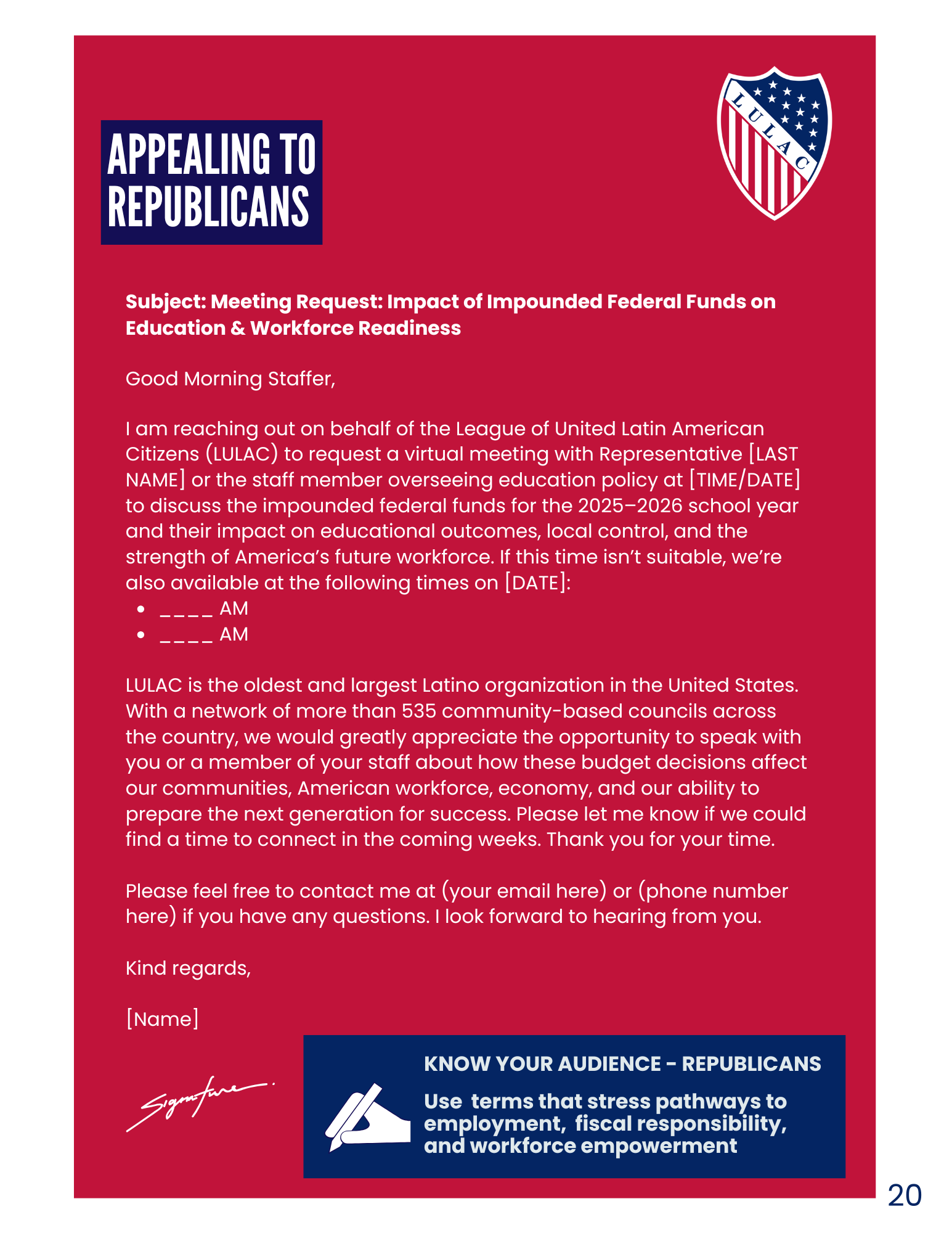
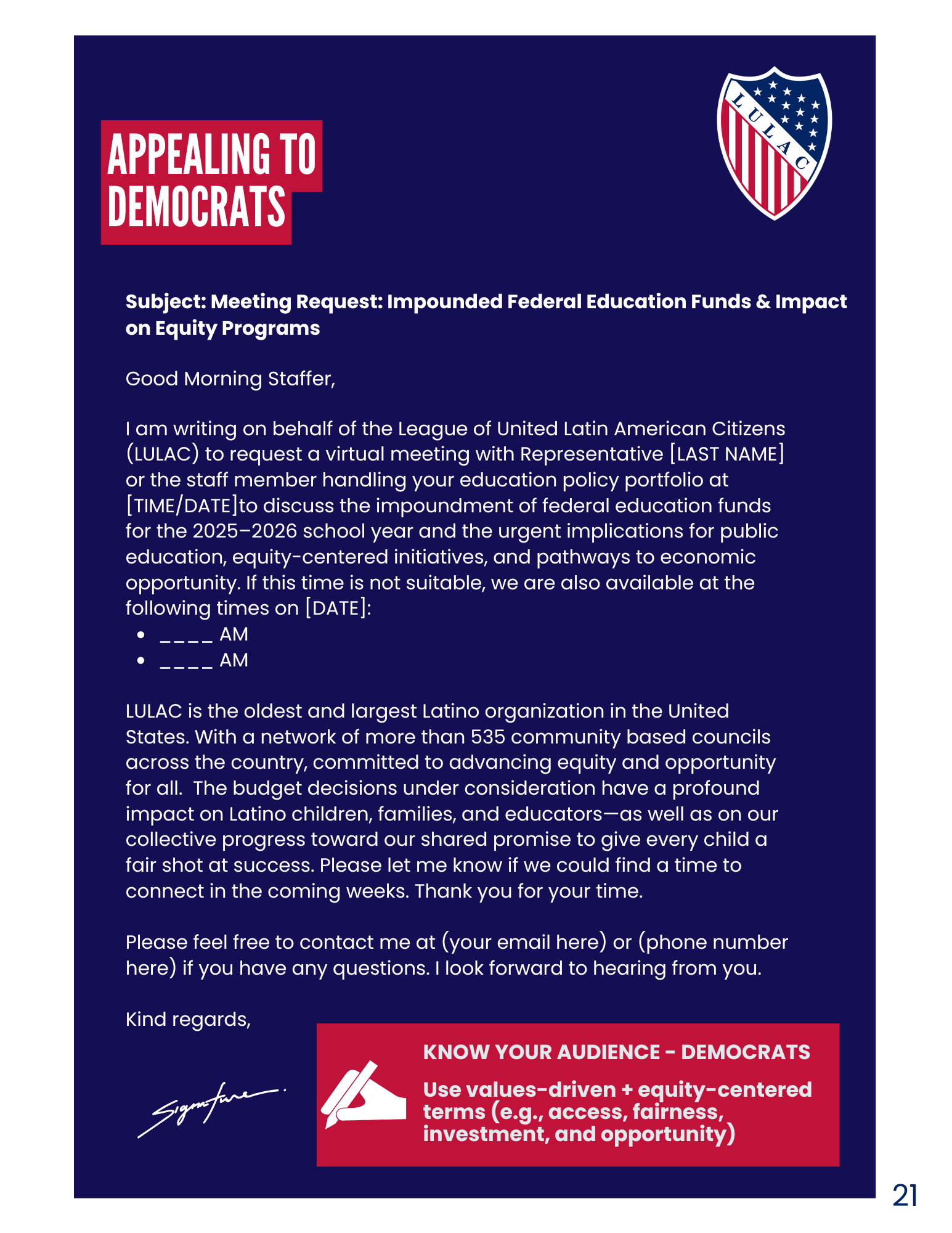
- Email Templates
- Know the Tools, Know the Impact
LULAC's Position on 2024 Legislative Platform
“The League of United Latin American Citizens (LULAC) believes that access to high-quality public education is a fundamental right for all, including immigrant and English learner students.
We oppose efforts to privatize education through vouchers or any measure that weakens public school resources.
Instead, we advocate for strong, equitable investments that close achievement gaps, reduce dropout rates, and empower Latino communities through culturally responsive and research-based practices.”
Policy Platform and Priorities LULAC Education Policy Platform Overview Accessed July 18, 2025
EDUCATION PRIORITIES: WHERE WE STAND
¡AVANZAMOS!
A ccess to scholarships
Support inclusive scholarship opportunities, regardless of citizenship status.
V oice in Curriculum
Ensure community input in implementing Common Core and education standards.
A ccountibility in waivers
Demand strong protections for vulnerable students in state Elementary and Secondary Education Act (ESEA) plans.
N urture early education
Expand Head Start and support parent engagement in early learning.
Z ERO TOLERANCE OPPOSITION
End harsh discipline policies that push Latino students out of classrooms.
A dult & bilingual education
Increase funding for Title I, III, and VII programs.
M ore Federal support
Sustain programs like WIC, TRIO, GEAR UP, HEP-CAMP, and LNESC.
O pportunity in higher ED
Expand Pell Grants, support HSIs, and reduce college costs.
S upport latino educators
Recruit and train Latino teachers, leaders, and school board members.
ELA State Grants
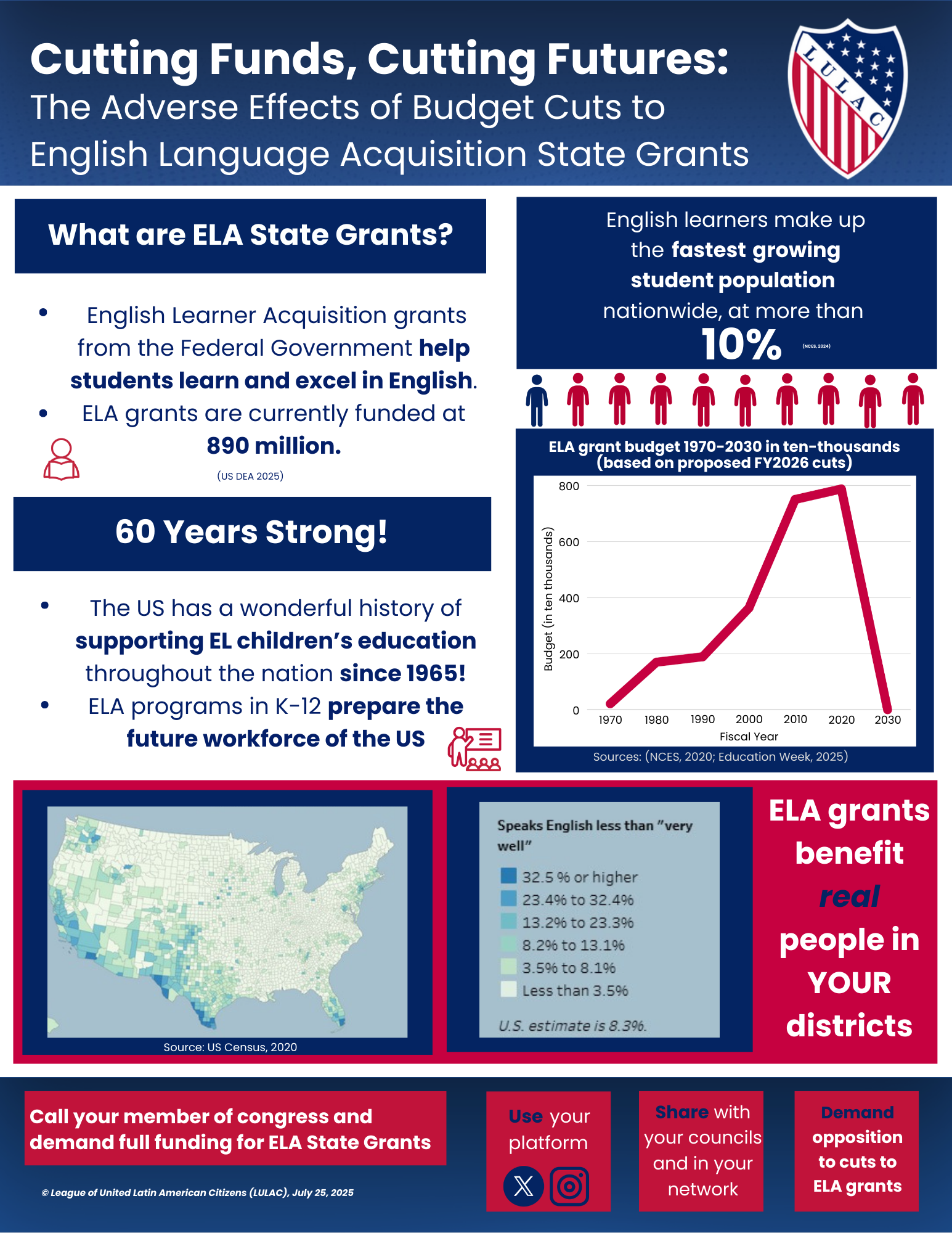
English Language Acquisition (ELA) State Grants are a vital source of federal funding that support K–12 programs helping English learners, who now make up more than 10 percent of the national student population.
These grants, currently funded at $890 million, have strengthened American education since 1965 by helping multilingual students succeed academically, socially, and economically.
The proposed cuts in the FY2026 federal budget would disrupt this legacy and threaten the future of the U.S. workforce. Losing this funding would limit opportunities for students and reduce our nation’s long-term economic potential.
Migrant Student Education Programs
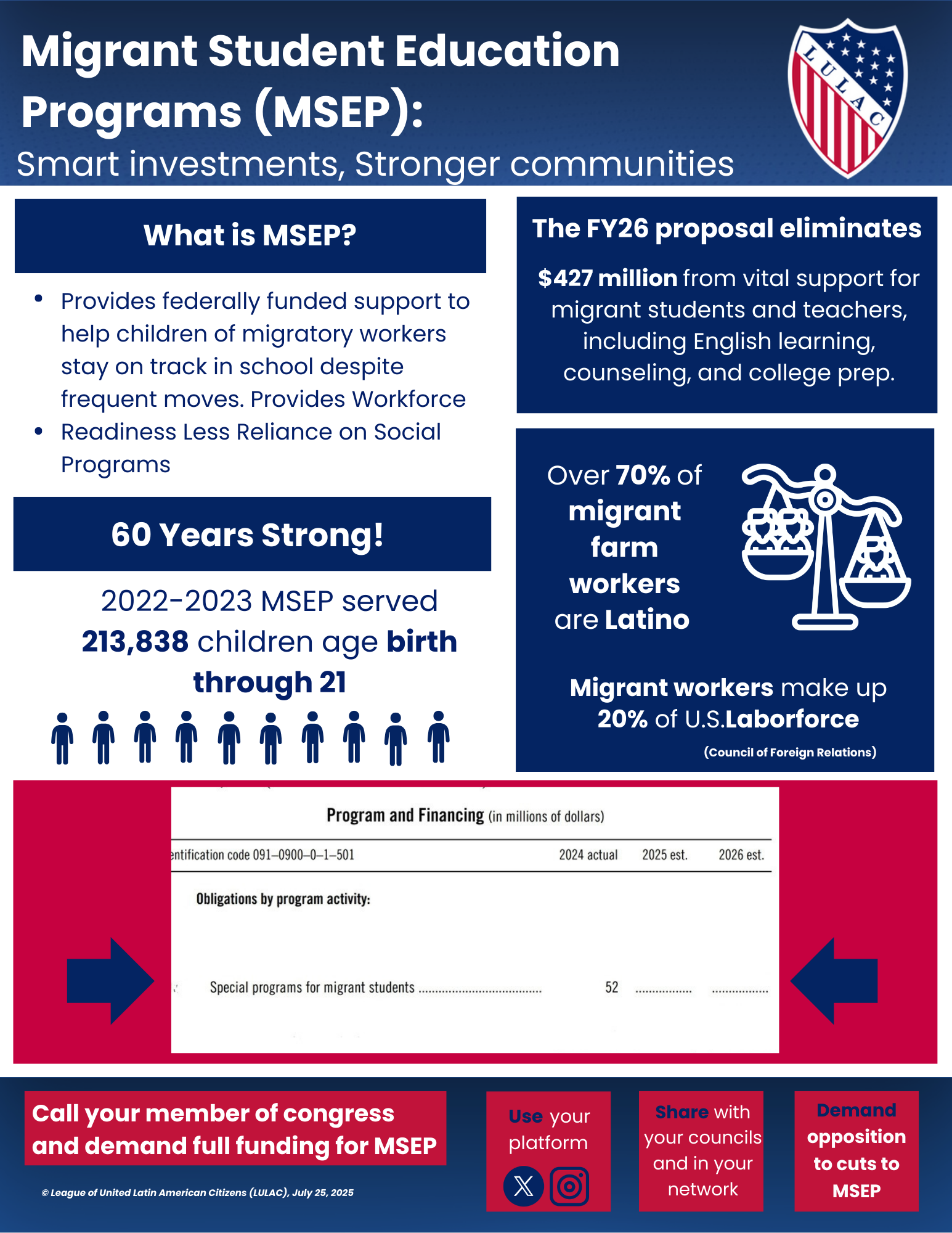
The Migrant Student Education Program (MSEP) provides essential federal funding to help the children of migratory farm workers-within and outside of the US. MSEP helps students, many of whom are Latino, stay on track in school despite frequent moves.
The program offers services like English language learning, counseling, and college preparation, all of which support long-term success and reduce reliance on social programs.
Although MSEP received $427 million for 2025, the FY2026 budget proposal would eliminate the program entirely. Such cuts would result in larger class sizes, fewer student services, and overwhelmed educators. With migrant workers making up 20 percent of the U.S. labor force, investing in their children’s education is key to building a stronger and more equitable economy.
TRIO
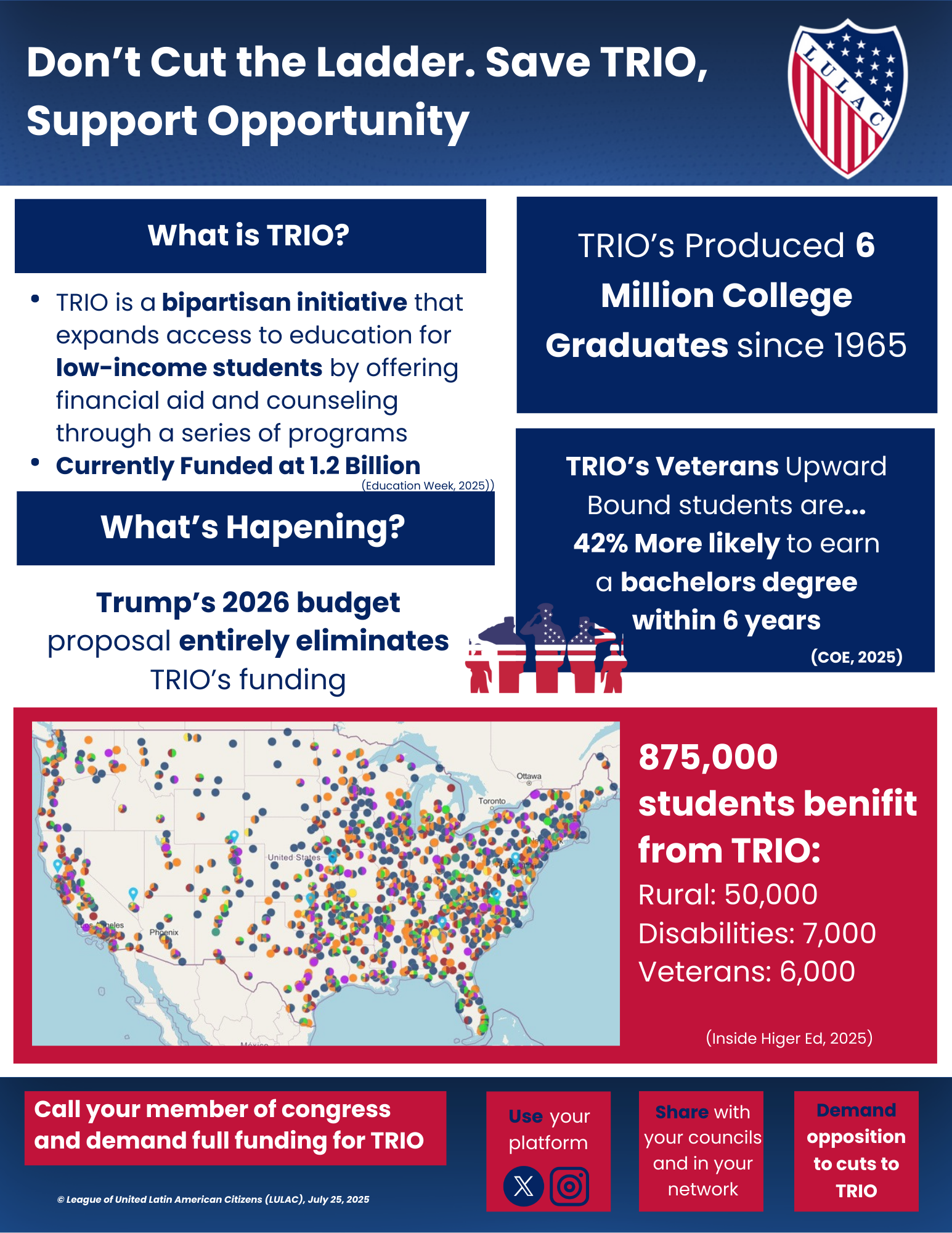
TRIO is a group of eight federally funded programs designed to expand access to higher education for low-income, first-generation, and disabled students.
This long-standing bipartisan initiative offers academic counseling, financial aid support, and mentorship, beginning in middle school and continuing through college graduation.
In FY 2024, TRIO received $1.2 billion and served nearly 875,000 students across the country. The FY 2026 budget proposal calls for eliminating TRIO entirely, removing critical support that helps students overcome systemic barriers to earning a college degree. Ending TRIO would deal a serious blow to educational equity and limit opportunities for upward mobility.
GEAR UP
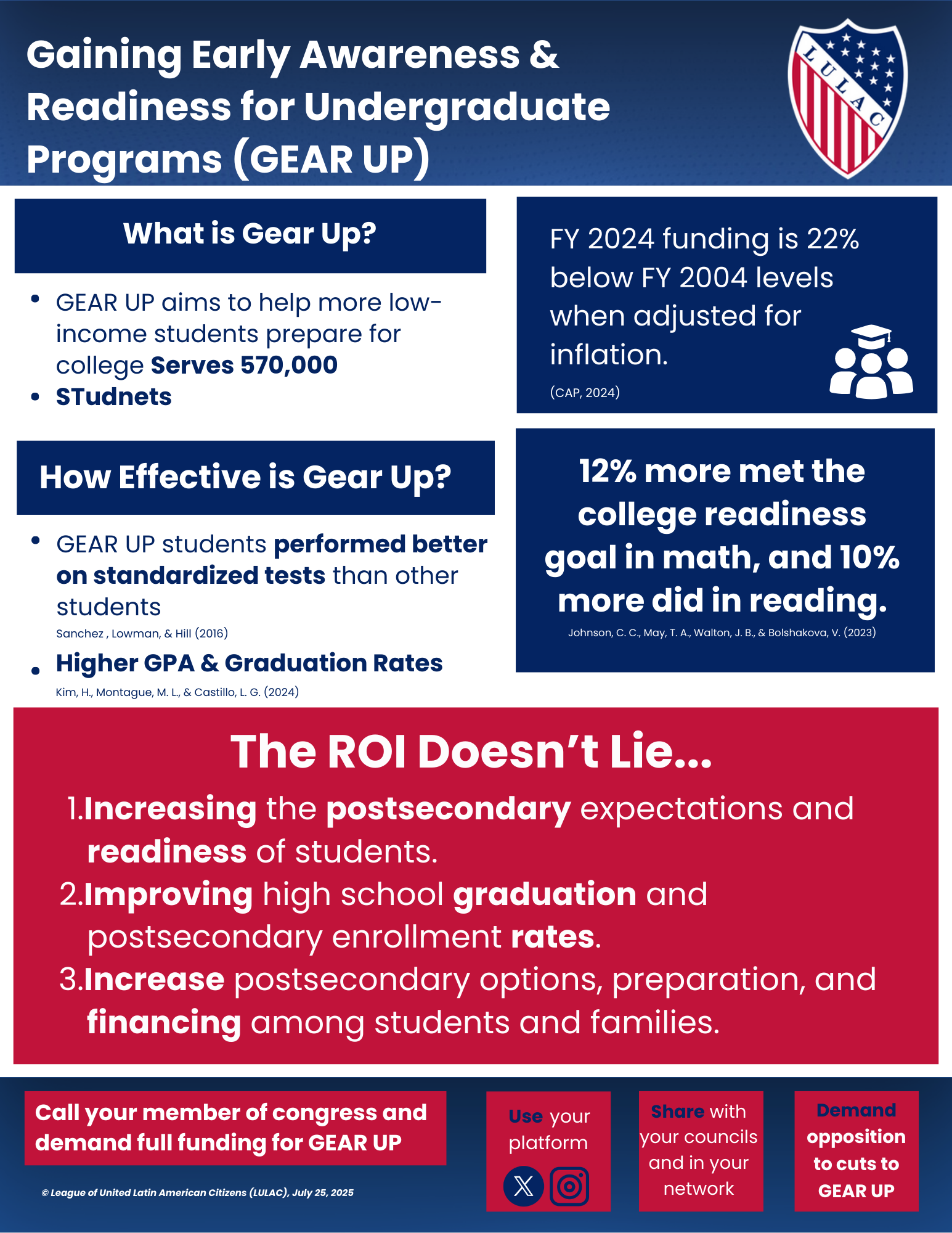
Gaining Early Awareness and Readiness for Undergraduate Programs (GEAR UP) is a federally funded initiative designed to increase college readiness among low-income students through early intervention and sustained support.
The program awards competitive grants to high-poverty middle and high schools, providing academic services, mentoring, and college scholarships as students progress toward post-secondary education.
In FY 2024, GEAR UP was funded at $388 million and served approximately 570,000 students nationwide. However, Trump’s FY 2026 budget proposal calls for the complete elimination of the program, putting hundreds of thousands of students at risk of losing critical resources that help them access and succeed in higher education.
21st CCLC
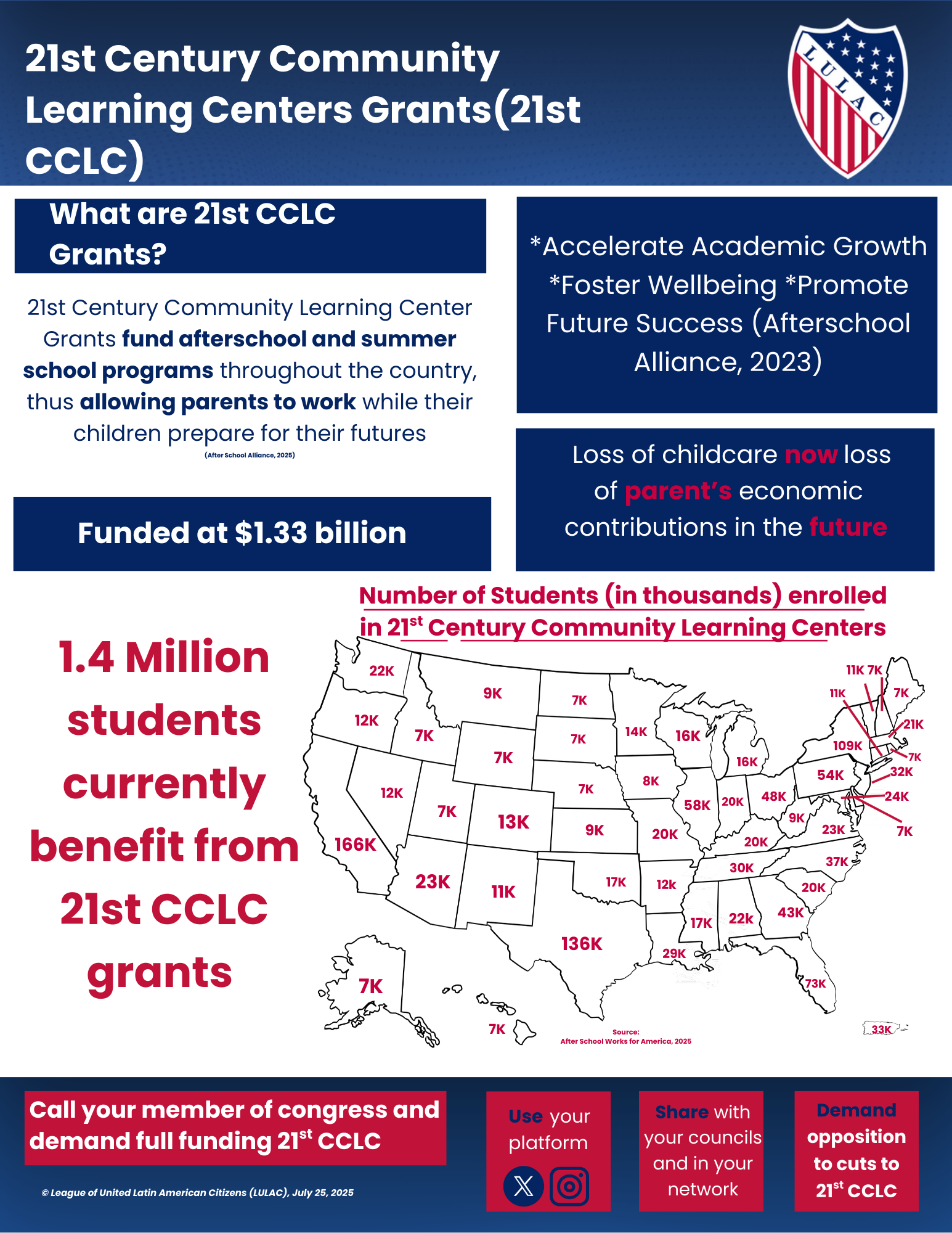
21st Century Community Learning Center grants support academic growth, emotional wellbeing, and long-term success for students, while also strengthening the workforce by ensuring parents have reliable, afterschool childcare that enables them to work and contribute to the economy.
In FY2025, the federal government invested $1.33 billion in these programs, providing learning opportunities to nearly one million students nationwide. The proposed FY2026 budget cuts would eliminate this vital resource.
Losing these programs would leave students without safe, enriching spaces and limit parents’ ability to fully participate in the workforce- harming both educational outcomes and the economy.
IDEA
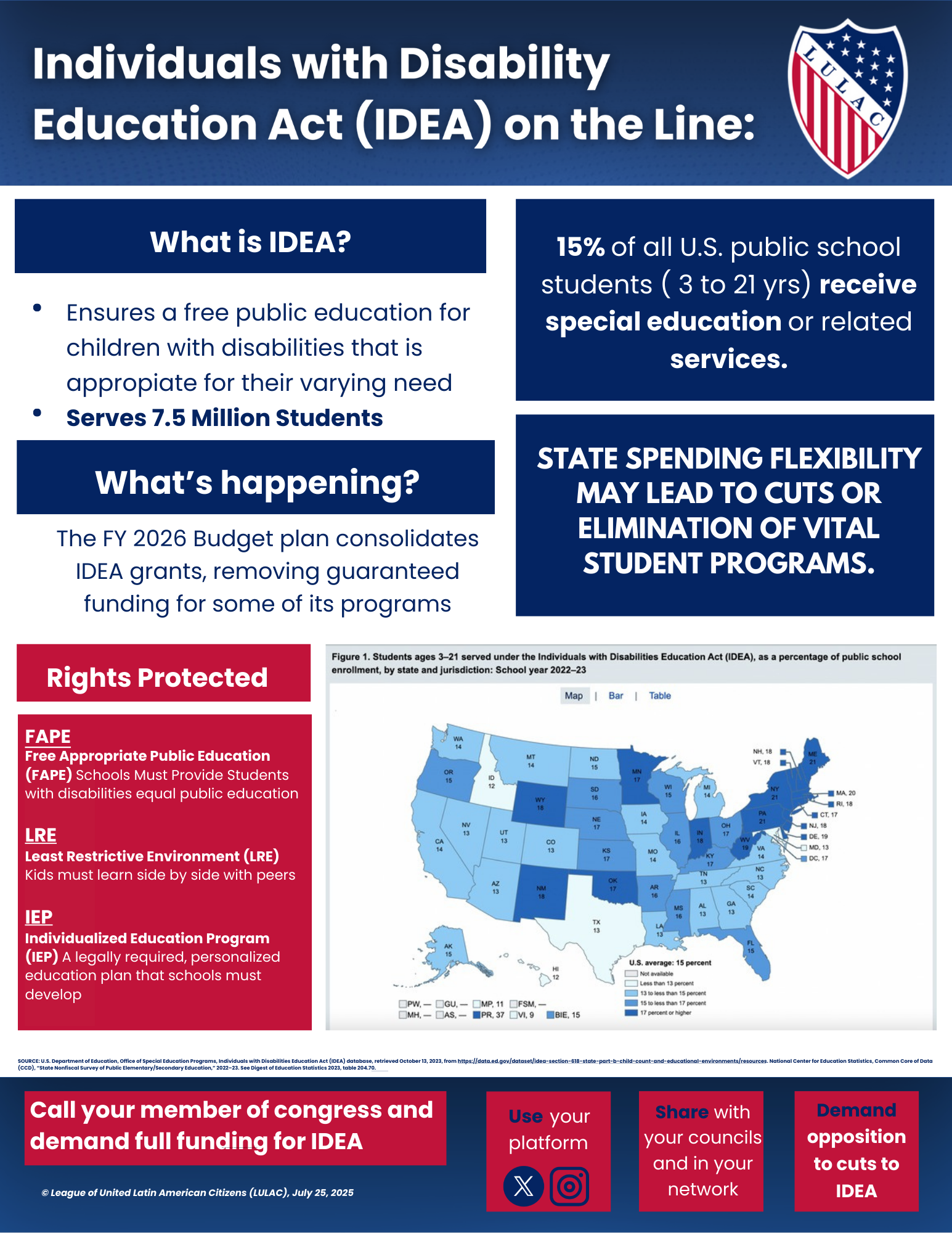
The Individuals with Disabilities Education Act (IDEA) ensures free and appropriate public education is available to students with disabilities.
Trump’s FY 2026 budget proposal seeks to consolidate IDEA funds under broader funding categories. This change will impact valuable special education funding areas, such as personnel preparation, by no longer ensuring it is properly funded or funded at all.
The proposed budget weakens federal safeguards for IDEA, risking cuts to critical special education services like personnel preparation. Currently 7.5 million students are served by the IDEA. Ultimately, consolidation harms students with disabilities by removing oversight and opening the door to funding cuts.
Head Start
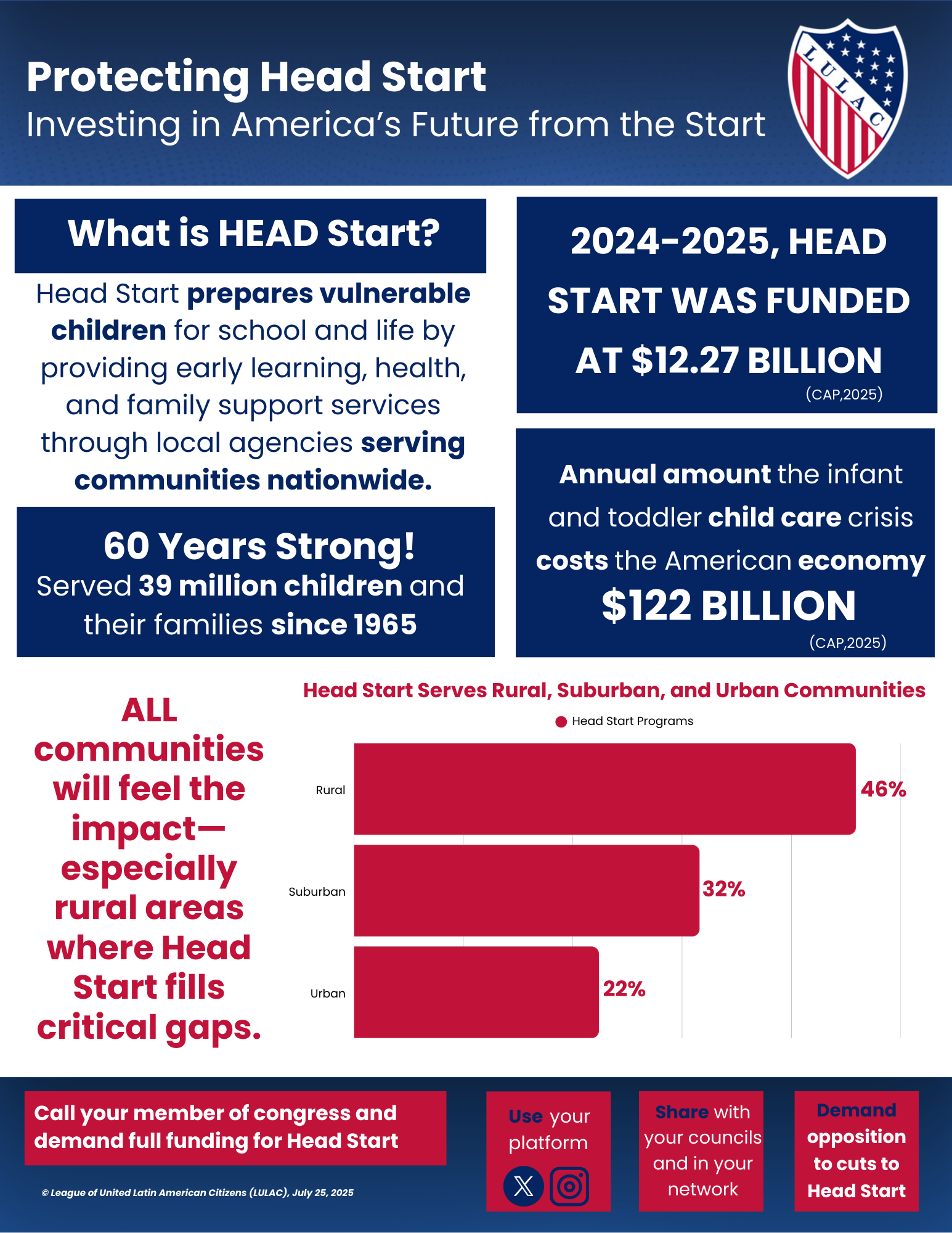
Head Start is a federally funded early childhood education program that has prepared over 39 million children from low-income families for school and lifelong success since 1965.
By providing comprehensive services in early learning, health, nutrition, and family support, Head Start plays a critical role in rural, suburban, and urban communities- often filling gaps where no other services exist.
In 2024–2025, it was funded at $12.27 billion, but with federal education funds now impounded, these programs face delays, staff cuts, and reduced access for families in need. Undermining Head Start doesn’t just impact young learners, it threatens community stability and contributes to a broader child care crisis already costing the U.S. economy $122 billion annually.
Adult Education
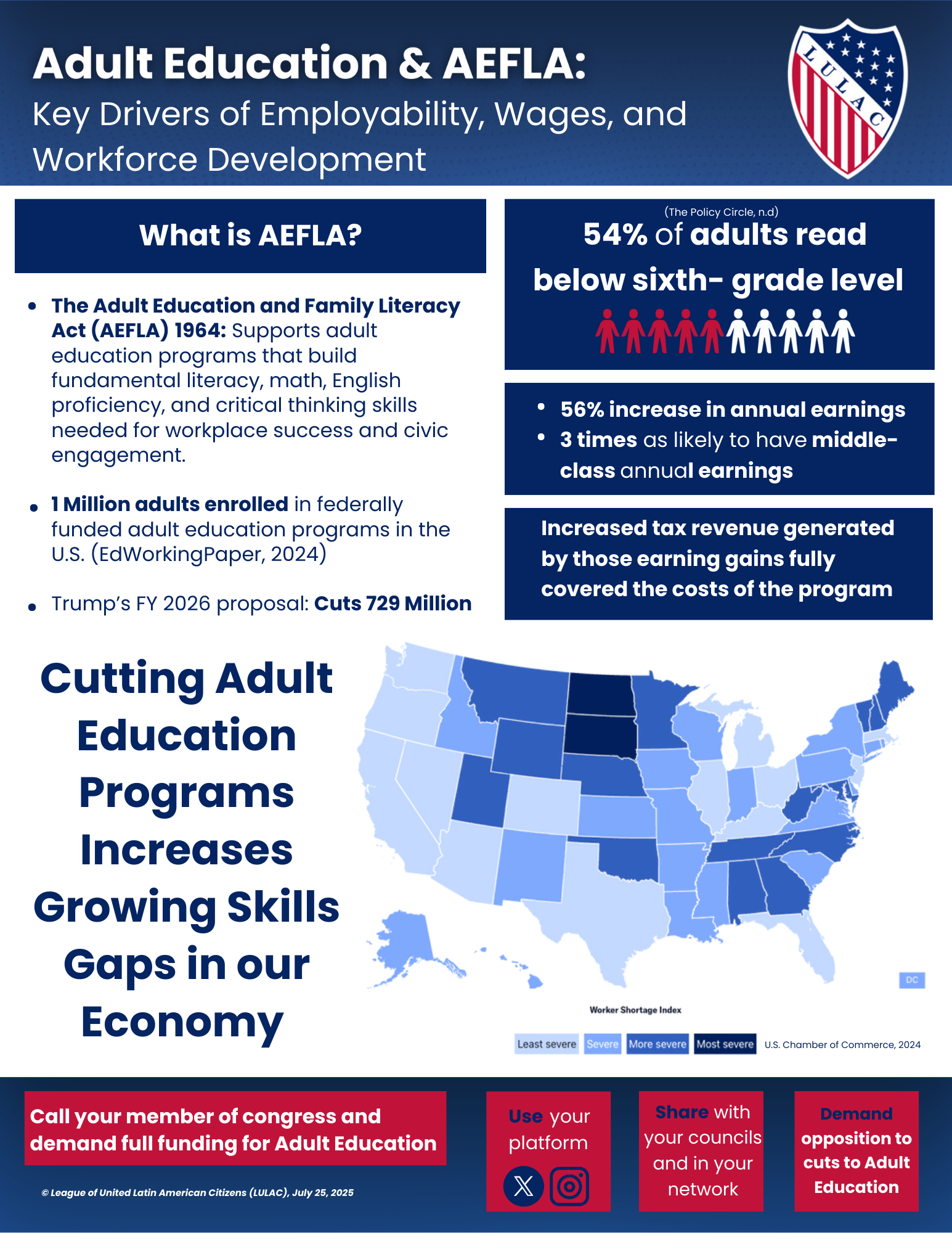
Adult education is essential to building a strong workforce and economy, yet it remains dangerously underfunded. Over half of American adults read below a sixth-grade level, limiting their job prospects and earning potential.
The Adult Education and Family Literacy Act (AEFLA), in place since 1964, funds programs that teach critical skills in literacy, math, English, and problem-solving- skills needed to get a job, support a family, and contribute to society.
Over 1 million adults rely on these programs each year. With federal education funds currently impounded, millions stand to lose access to life-changing opportunities. Weakening AEFLA undermines workforce development and threatens the economic future of our nation.
Words matter
Know the Language, Shape the policy
Federal education laws and programs
- ESEA (Elementary and Secondary Education Act); Foundational federal law funding K–12 education, focused on equity and accountability.
- ESSA (Every Student Succeeds Act); 2015 reauthorization of ESEA (1965), granting states flexibility while maintaining accountability for underserved students.
- IDEA (Individuals with Disabilities Education Act); Guarantees students with disabilities the right to Free Appropriate Public Education (FAPE) and specialized supports.
- Title I; Federal funding for schools with high percentages of low-income students to improve academic performance.
- Title III; Supports English learners (ELs) and immigrant students.
- Title VII; Supports bilingual and Native American education programs.
- Migrant Education; Supports students of mobile or seasonal farmworker families.
- Supporting Effective Instruction (Title II); Funds teacher development, retention, and leadership.
- Student Support and Academic Enrichment (Title IV, Part A); Funds activities to improve student safety, technology access, and well-rounded learning.
- 21st Century Community Learning Centers; Provides after-school and summer programs for students in high-poverty areas.
English learners & bilingual education
- English Language Acquisition; The process through which non-native speakers learn English.
- English Learner (EL); A student learning English in addition to their first language.
- Bilingual Education; Instruction that teaches academic content in two languages.
- Dual Language Programs; Programs designed to develop full proficiency in English and a partner language.
Educational equity and instruction
- Achievement Gap; Differences in academic performance among student subgroups (e.g., by race, language, income).
- Opportunity Gap; Inequities in access to quality resources, educators, and programs.
- Culturally Responsive Teaching; Teaching that reflects and values students’ cultural identities and experiences.
- Disaggregated Data; Data separated by subgroup (e.g., ethnicity, disability) to uncover disparities.
- Dropout Prevention; Interventions that help at-risk students stay in school and graduate.
- Supporting Effective Instruction; Efforts to strengthen teacher quality and classroom effectiveness.
- Voucher; Public funds used to pay for private school tuition. LULAC opposes vouchers for diverting resources from public education
Student support, inclusion & discipline
- FAPE (Free Appropriate Public Education); Required under IDEA and Section 504 to ensure students with disabilities receive individualized support at no cost.
- 504 Plan; A plan providing accommodations to students with disabilities who don’t qualify under IDEA.
- IEP (Individualized Education Program); A legal education plan created for students eligible under IDEA.
- Inclusive Education; Educating students with disabilities alongside their non-disabled peers in general education settings.
- Wraparound Services; Comprehensive support systems (mental health, family counseling, nutrition, etc.) offered through schools.
- Zero-Tolerance Policies; Strict disciplinary policies that often disproportionately affect students of color and those with disabilities.
Early childhood & family supports
- Head Start; Comprehensive early learning, health, and nutrition services for young children in low-income families.
- WIC (Women, Infants, and Children); Nutritional support program for low-income pregnant women and children under five.
- LNESC (LULAC National Educational Service Centers); LULAC’s education arm offering academic enrichment, mentorship, and college access programs for Latino youth.
Higher education & workforce
- Postsecondary Access; Ensuring students can enroll in and complete college or career training programs.
- Pell Grant; Federal grant for low-income students pursuing higher education.
- GEAR UP; Helps low-income students prepare for and succeed in postsecondary education.
- TRIO; Programs that support first-generation, low-income, and disabled students in college access and success.
- HEP-CAMP; Supports educational attainment among migrant and seasonal farmworker families.
- Workforce Development; Education and training that prepare students for employment and advancement.
- Vocational and Technical Training; Skills-based education preparing students for careers in trades and technical fields.
- Hispanic-Serving Institutions (HSIs); Colleges/universities with 25% or more Hispanic undergraduate enrollment; eligible for federal funding to support Latino student success.
Know the Tools, Know the Impact
Find your elected offcials
- Find your representative in the House
- Find your representative in the Senate
- Find your other Federal, State and Locally elected leaders
Federal education policy and funding
- Ed Funds Now
- A Summary of Federal Education Laws Administered by the U.S. Department of Education
- Federal Policy- Education Week
- What Federal Changes Mean For Your Classroom- Educators for Excellence
- Higher Education: The Long-Term Consequences of New Federal Policies- CliftonLarsonAllen
- Withhold of State Funds - Afterschool Works for America
State-specific resources
- State Education Policy Tracking
- 7 Education Policy Trends for State Lawmakers in 2025
- Solutions for States: Education Reform
- Resources for Districts
How to advocate for education equity
- LULAC- Action & Policy Center
- National Latinx Education Research and Policy Project
- UnidosUS Action Center
- Education Commission of the States
- Join LULAC Councils and Education Committee
- LULAC Education Issues
- National Equity Project
- Alliance for Resource Equity
- Excelencia in Education
- Education Trust
- National Assessment of Educational Progress: Achievement Gaps
Reliable news and data